 CALL US: +91-8657407598


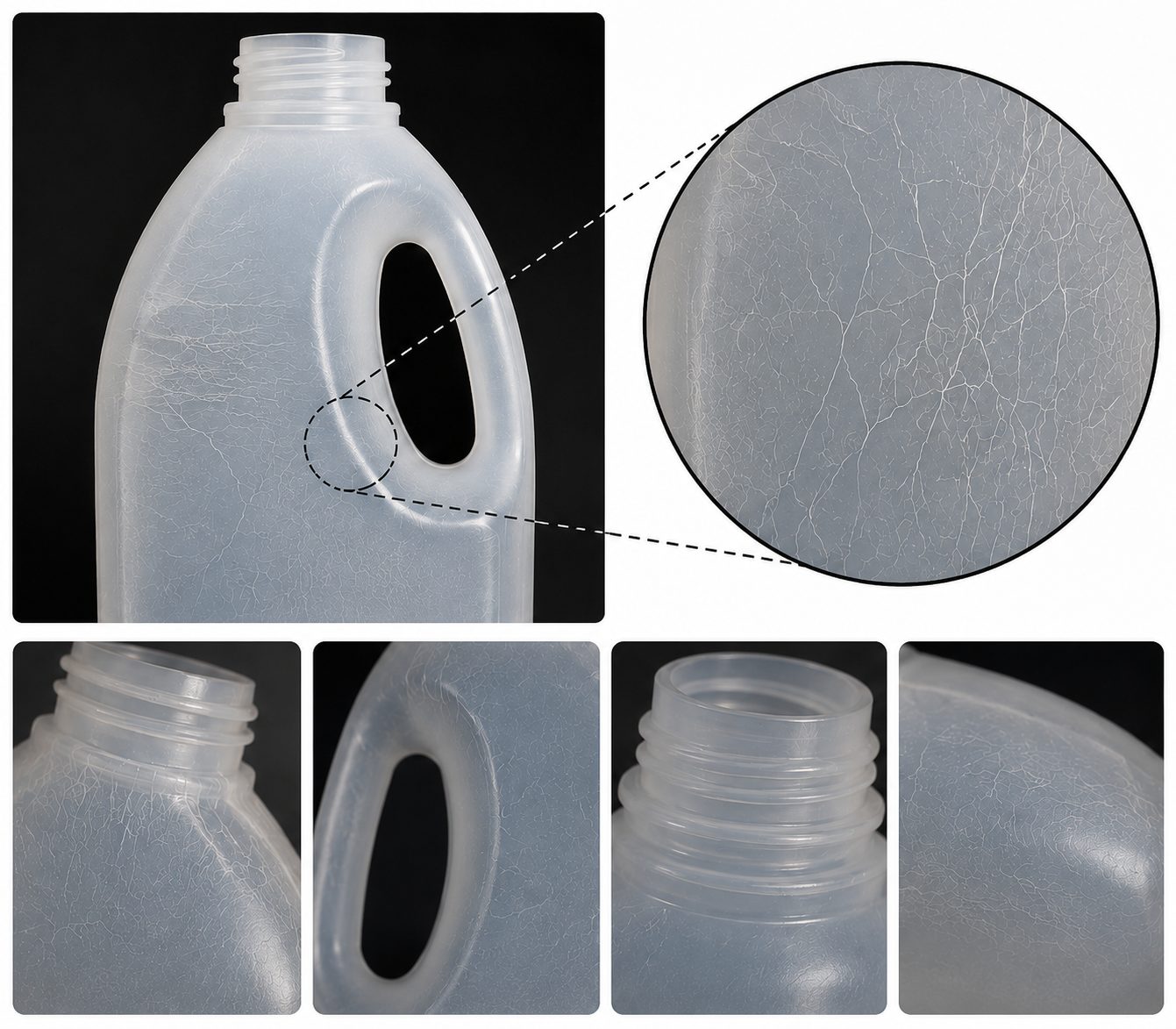
Why HDPE Bottles Crack: The Complete Guide to Environmental Stress Cracking (ESCR) in Blow Molding
Learn what Environmental Stress Cracking (ESCR) is, why HDPE bottles crack after production, how masterbatch selection influences performance, and how packaging manufacturers can permanently eliminate one of the industry's most expensive failure modes.
Table of Contents
- What is Environmental Stress Cracking (ESCR)?
- Why HDPE Bottles Crack After Filling
- Signs and Symptoms of ESCR
- Which Chemicals Cause ESCR?
- The Science Behind ESCR
- Why HDPE Molecular Structure Matters
- Why Bimodal HDPE Performs Better
- Blow Molding Factors That Increase ESCR
- How Masterbatch Can Improve or Destroy ESCR
- Pigment Selection and Carrier Resin Compatibility
- Antioxidants and Polymer Protection
- How ESCR is Tested
- ESCR Troubleshooting Guide
- Frequently Asked Questions
- Free ESCR Audit
Estimated Reading Time: 18–22 minutes
What is Environmental Stress Cracking (ESCR)?
Imagine producing 100,000 perfectly molded HDPE detergent bottles.
Every bottle passes visual inspection.
Every bottle passes leak testing.
Every bottle passes drop testing.
The shipment reaches your customer.
Two weeks later, bottles begin cracking inside cartons. Retail shelves are contaminated with leaking detergent. Thousands of bottles must be recalled. Production is halted while engineers search for the cause.
The resin supplier blames the masterbatch.
The masterbatch supplier blames the blow molding process.
Production blames the resin.
Meanwhile, your customer simply sees defective packaging.
This scenario plays out every day across the packaging industry and is one of the most expensive quality failures faced by manufacturers of detergent bottles, lubricant containers, agrochemical packaging, personal care containers, and industrial chemical packaging.
The underlying cause is often Environmental Stress Cracking (ESCR).
Unlike impact damage or chemical degradation, ESCR develops silently over time. A bottle that appears flawless immediately after production may develop microscopic cracks days or weeks later when exposed to certain chemicals under stress.
Because these failures occur after filling, storage, transportation, or retail display, they are significantly more expensive than defects detected during manufacturing.
Understanding ESCR is therefore not simply about improving bottle quality—it is about protecting customer relationships, preventing recalls, and safeguarding brand reputation.
What Exactly is Environmental Stress Cracking?
Environmental Stress Cracking (ESCR) is a failure mechanism in which a plastic component develops cracks due to the combined effect of mechanical stress and exposure to certain chemicals, even though the chemical itself does not chemically attack or dissolve the polymer.
This distinction is important.
Many people assume detergents or chemicals "eat away" at HDPE.
They do not.
Instead, chemicals such as surfactants, detergents, oils, wetting agents, and solvents penetrate microscopic regions within the polymer structure. These chemicals reduce intermolecular resistance inside stressed areas, allowing existing internal stresses to initiate brittle cracks.
In other words:
Stress alone usually isn't enough.
Chemical exposure alone usually isn't enough.
The combination of both creates the perfect conditions for failure.
Why ESCR Matters More Than Ever
Modern packaging manufacturers are under constant pressure to reduce costs.
They use:
- thinner bottle walls
- higher recycled content
- faster production speeds
- shorter cooling cycles
- increased automation
While these improvements increase productivity, they also reduce the safety margin against ESCR.
At the same time, the products being packaged have become increasingly aggressive.
Today's formulations often contain:
- powerful surfactants
- wetting agents
- emulsifiers
- industrial cleaners
- concentrated pesticides
- automotive lubricants
- alkaline solutions
These products significantly increase the likelihood of stress cracking if bottle design, resin selection, processing conditions, and masterbatch formulation are not carefully optimized.
As a result, ESCR has become one of the most critical performance parameters in rigid HDPE packaging.
Why Do HDPE Bottles Crack After Filling?
One of the most common questions production engineers ask is:
"If my bottle passed every quality inspection, why did it crack after filling?"
The answer lies in timing.
ESCR is rarely an immediate failure.
Instead, the bottle accumulates invisible damage over time.
A typical sequence looks like this:
Stage What Happens
Blow molding Internal stresses become locked into the bottle.
Filling Surfactants or chemicals begin contacting the inner wall.
Storage Chemicals slowly penetrate stressed polymer regions.
Transportation Minor loads increase stress concentration.
Days or weeks later Microscopic cracks begin forming.
Final failure The crack propagates rapidly, causing leakage or complete bottle failure.
This delayed failure makes ESCR particularly difficult to diagnose because production may have moved on to entirely different batches before complaints are received.
Common Signs of Environmental Stress Cracking
Recognizing ESCR early can prevent expensive field failures.
Typical symptoms include:
Hairline Cracks
Fine cracks appearing near the neck, shoulder, or base of the bottle.
Whitening Before Failure
Localized whitening or stress marks often appear before visible cracking.
Cracks Near the Pinch-Off
The pinch-off weld experiences significant molding stress and is one of the most common initiation sites.
Base Splitting
The bottom of the bottle may suddenly split during stacking or storage.
Leakage Without Impact
Products begin leaking despite no visible external damage.
Delayed Failure
Perhaps the most distinctive symptom of ESCR is that bottles often survive production testing only to fail days or weeks later.
Industries Most Affected by ESCR
Almost every blow-molded HDPE application can experience stress cracking, but certain industries are particularly vulnerable because of the chemicals they package.
Industry Typical Products ESCR Risk
Household Cleaning Liquid detergents, floor cleaners, dishwashing liquids Very High
Agrochemicals Herbicides, pesticides, fertilizers Very High
Automotive Engine oil, coolant, lubricants High
Personal Care Shampoo, conditioner, body wash Moderate
Industrial Chemicals Degreasers, solvents, cleaning agents Very High
Food Packaging Milk, edible oils Low
The higher the concentration of surfactants or wetting agents, the greater the potential for ESCR.
Why This Guide is Different
Most articles explain ESCR by discussing polymer science alone.
Others focus only on blow molding.
Some blame poor resin selection.
Very few explain how all four critical factors interact:
- Polymer selection
- Blow molding process
- Bottle design
- Masterbatch formulation
In reality, ESCR is almost never caused by a single issue.
It is the result of multiple small decisions that combine to determine the long-term durability of the bottle.
This guide brings those factors together to provide practical engineering solutions that manufacturers can apply immediately.
Free ESCR Engineering Checklist
Before changing resin grades or investing in new molds, it is worth evaluating whether your current formulation and processing conditions are contributing to premature failures.
Download our free ESCR Troubleshooting Checklist to review:
- Resin selection
- Melt Flow Index compatibility
- Masterbatch carrier selection
- Pigment compatibility
- Blow molding parameters
- Cooling conditions
- Antioxidant requirements
- Quality control checks before commercial production
The Science Behind Environmental Stress Cracking (ESCR): Understanding Why HDPE Bottles Fail
SEO Keywords: HDPE molecular structure, ESCR mechanism, HDPE crystallinity, tie molecules, amorphous regions, bimodal HDPE, molecular weight, polymer morphology, environmental stress cracking mechanism
The Science Behind ESCR
Before changing machine settings, switching resin suppliers, or replacing your masterbatch, it's important to understand why Environmental Stress Cracking happens at the molecular level.
Many engineers describe ESCR as a material defect.
In reality, it is a materials engineering problem resulting from the interaction of:
- Polymer structure
- Internal mechanical stress
- Processing history
- Chemical exposure
- Time
Think of ESCR as a chain reaction. None of these factors alone usually causes failure—but when they occur together, they create the ideal conditions for cracks to initiate and propagate.
Understanding this mechanism helps manufacturers make informed decisions about resin selection, bottle design, processing conditions, and masterbatch formulation.
HDPE is Not One Solid Material
Although HDPE bottles appear uniform, the polymer is not a continuous solid.
Under a microscope, HDPE resembles a landscape made up of two distinct regions:
- Crystalline regions – tightly packed, highly ordered polymer chains that provide stiffness and strength.
- Amorphous regions – loosely arranged polymer chains that provide flexibility and toughness.
Neither region alone determines ESCR performance. The balance between them is what matters.
Crystalline Regions: The Structural Backbone
Crystalline regions are formed when polymer chains align in an orderly fashion as the melt cools after blow molding.
These regions provide:
- High stiffness
- Excellent tensile strength
- Chemical resistance
- Dimensional stability
- Increased hardness
However, there is a trade-off.
Highly crystalline materials can become less capable of absorbing localized stresses. When excessive stress is concentrated in one area, cracks can travel rapidly through these rigid structures.
A common misconception is that "more crystallinity is always better."
For ESCR, that is not necessarily true.
The goal is not maximum crystallinity—it is an optimized balance between stiffness and toughness.
Amorphous Regions: The Flexible Network
Between the crystalline regions lie amorphous regions, where polymer chains are randomly arranged.
These areas provide:
- Flexibility
- Impact resistance
- Energy absorption
- Resistance to brittle fracture
Unfortunately, these are also the regions where surfactants and other stress-cracking agents tend to penetrate.
When aggressive chemicals diffuse into the amorphous phase, they reduce friction between polymer chains, making it easier for the chains to slide apart under existing stress.
This is why ESCR is often described as a physical failure rather than chemical degradation.
The chemical is not dissolving the HDPE—it is enabling an existing weakness to grow into a crack.
The Most Important Concept: Tie Molecules
If there is one concept every packaging engineer should understand, it is tie molecules.
These are long polymer chains that pass through multiple crystalline regions, effectively tying the entire structure together.
Imagine building a brick wall.
The crystalline regions are the bricks.
The tie molecules are the steel reinforcement bars connecting them.
Without those reinforcement bars, individual bricks can separate under load.
The same happens inside HDPE.
When sufficient tie molecules are present:
- Stress is distributed evenly.
- Cracks struggle to propagate.
- Mechanical strength increases.
- ESCR resistance improves significantly.
When tie molecules are lacking:
- Stress concentrates at microscopic defects.
- Cracks initiate more easily.
- Crack growth accelerates.
- Premature bottle failure becomes much more likely.
Why Molecular Weight Matters
Tie molecules are directly related to molecular weight.
Longer polymer chains create more opportunities for chains to bridge crystalline regions.
This is why molecular weight has such a profound influence on ESCR performance.
High Melt Flow Index (High MFI)
High MFI resins have:
- Lower molecular weight
- Shorter polymer chains
- Faster processing
- Easier mold filling
- Lower melt strength
Advantages:
- Higher productivity
- Lower cycle times
- Better surface finish
Disadvantages:
- Fewer tie molecules
- Reduced toughness
- Lower ESCR resistance
Low Melt Flow Index (Low MFI)
Low MFI resins have:
- Higher molecular weight
- Longer polymer chains
- More tie molecules
- Greater melt strength
- Better long-term durability
Advantages:
- Superior ESCR resistance
- Improved crack resistance
- Better mechanical integrity
Trade-offs:
- Higher extrusion pressure
- More demanding processing
- Slightly longer cycle times
Choosing resin solely for faster production can therefore increase the likelihood of costly field failures later.
Why Bimodal HDPE Performs Better
Modern detergent bottles and chemical containers rarely rely on conventional HDPE alone.
Many high-performance packaging applications now use bimodal HDPE.
Rather than consisting of one molecular weight distribution, bimodal HDPE combines:
- A lower molecular weight fraction for processability.
- A higher molecular weight fraction for strength and ESCR resistance.
This provides manufacturers with the best of both worlds.
Property Conventional HDPE Bimodal HDPE
Processing Good Excellent
Melt strength Moderate High
ESCR resistance Moderate Excellent
Bottle stiffness Good Excellent
Long-term durability Moderate High
The longer polymer chains in the high molecular weight fraction create more tie molecules, while the shorter chains help the resin flow efficiently during extrusion blow molding.
For demanding applications such as detergent, agrochemical, lubricant, and industrial chemical packaging, bimodal HDPE is widely regarded as the preferred choice.
Internal Stress: The Hidden Enemy
Even the highest-quality resin cannot compensate for excessive internal stress created during processing.
When molten HDPE exits the die head, polymer chains are stretched and oriented.
As the bottle cools inside the mold, these chains should gradually relax into a stable structure.
If cooling occurs too quickly or unevenly, that relaxation is interrupted.
Residual stresses become locked into the bottle wall.
These stresses remain invisible until the bottle is exposed to a stress-cracking agent.
Only then do microscopic cracks begin to form.
This is why two bottles made from the same resin can exhibit dramatically different ESCR performance depending on how they were processed.
The Three Conditions Required for ESCR
Contrary to popular belief, ESCR does not occur because of a single issue.
Three conditions generally need to exist simultaneously:
1. Internal Stress
Generated during blow molding through rapid cooling, uneven wall thickness, poor pinch-off design, or excessive orientation.
↓
2. Stress-Cracking Agent
Typically surfactants, detergents, lubricants, wetting agents, pesticides, or other chemicals that reduce intermolecular resistance.
↓
3. Time
Cracks usually develop gradually during storage, transportation, or use rather than immediately after production.
Remove any one of these three factors, and the likelihood of ESCR decreases significantly.
Recommended Flowchart: Three overlapping circles labeled Internal Stress, Chemical Exposure, and Time, with ESCR at the intersection.
Why Production Trials Can Be Misleading
One of the biggest challenges with ESCR is that it rarely appears during routine production checks.
Manufacturers typically perform:
- Visual inspection
- Leak testing
- Drop testing
- Dimensional checks
- Weight verification
While all of these tests are important, none are specifically designed to predict long-term ESCR performance.
A bottle can pass every factory inspection and still fail weeks later once it has been filled, transported, and exposed to aggressive chemicals.
This is why dedicated ESCR testing methods are essential for applications involving detergents, lubricants, agrochemicals, and industrial cleaners.
Key Takeaways
- HDPE consists of both crystalline and amorphous regions, each contributing differently to mechanical performance.
- Tie molecules are critical for distributing stress and preventing crack propagation.
- Higher molecular weight resins generally provide better ESCR resistance because they contain more effective tie molecules.
- Bimodal HDPE combines processability with superior long-term durability, making it ideal for demanding packaging applications.
- ESCR typically results from the combined effects of internal stress, chemical exposure, and time—not from a single processing or material defect.
- Understanding the polymer structure provides the foundation for optimizing blow molding conditions, bottle design, and masterbatch selection.
Why HDPE Bottles Crack in Real Production: Chemicals, Blow Molding & Bottle Design Factors That Trigger ESCR
SEO Keywords: HDPE bottle cracking, detergent bottle cracking, blow molding defects, ESCR causes, HDPE bottle design, blow molding process optimization, residual stress in HDPE, chemical resistance of HDPE
Why Do Some HDPE Bottles Crack While Others Don't?
Two manufacturers may use:
- The same HDPE resin
- The same blow molding machine
- The same bottle design
- Similar production rates
Yet one experiences field failures while the other produces millions of bottles without issue.
Why?
Because ESCR is rarely caused by a single factor.
Instead, it is the cumulative result of dozens of small decisions made during material selection, processing, cooling, bottle design, and quality control.
Think of ESCR as building pressure inside the bottle. Every poor decision adds a little more stress until one final trigger causes the bottle to fail.
In this section, we'll examine the most common triggers—and how to eliminate them.
Which Chemicals Cause Environmental Stress Cracking?
One of the biggest misconceptions in packaging is that "strong chemicals attack HDPE."
In reality, many of the worst ESCR-causing substances are not particularly corrosive.
Instead, they are surface-active agents (surfactants) that reduce the intermolecular forces within the polymer's amorphous regions, making it easier for existing stresses to create cracks.
Common Chemicals That Can Trigger ESCR
Product Typical ESCR Risk Why It Matters
Liquid laundry detergent Very High High surfactant concentration
Dishwashing liquid Very High Strong wetting agents
Floor cleaners Very High Surfactants and alkaline components
Industrial degreasers Very High Aggressive cleaning formulations
Agricultural pesticides Very High Solvents and surfactants
Herbicides Very High Long storage periods increase exposure
Engine oil High Long-term contact with additives
Brake fluid High Depends on formulation
Shampoo Moderate Moderate surfactant levels
Fabric conditioner High Surface-active ingredients
Milk Very Low Generally low ESCR risk
Drinking water Very Low Negligible risk
Why Detergents Are Particularly Dangerous
Detergents are among the most common causes of ESCR in blow-molded HDPE bottles.
This is not because detergents dissolve HDPE.
Rather, surfactants penetrate the polymer's amorphous regions and reduce the friction that normally keeps polymer chains intertwined.
If residual stresses already exist within the bottle wall, those stresses can now initiate microscopic cracks that continue growing over time.
This explains why detergent bottles often fail after weeks of storage rather than immediately after production.
Where Do HDPE Bottles Usually Crack?
ESCR doesn't occur randomly.
It almost always begins at locations where stress is naturally concentrated.
Common Crack Initiation Points
1. Pinch-Off Weld
The pinch-off is one of the highest-stress regions in an extrusion blow-molded bottle.
Poor weld quality, excessive flash, or improper pinch-off geometry can create weak points that become the starting location for ESCR.
2. Bottle Shoulder
The shoulder experiences complex material flow during blowing.
Uneven wall thickness or excessive orientation can increase residual stress in this area.
3. Neck Finish
Threads, tamper bands, and sharp transitions create localized stress concentrations.
Improper cap torque may further increase stresses after filling.
4. Base Corners
Sharp internal corners prevent stress from being distributed evenly.
Even slight design changes to increase corner radii can significantly improve durability.
5. Molded Logos and Embossing
Deep embossing or aggressive branding features may reduce wall thickness locally.
These regions often become crack initiation sites during long-term storage.
Blow Molding Parameters That Increase ESCR
Many manufacturers immediately blame the resin or masterbatch when bottles begin cracking.
However, the blow molding process itself often introduces the residual stresses that make ESCR possible.
Let's examine the key variables.
1. Melt Temperature
If the melt temperature is too low:
- Polymer flow becomes uneven.
- Material orientation increases.
- Internal stress rises.
If the melt temperature is too high:
- Thermal degradation may begin.
- Polymer chains become shorter.
- Mechanical properties decrease.
Best practice: Operate within the resin supplier's recommended processing window and monitor melt consistency rather than chasing the lowest possible cycle time.
2. Cooling Rate
Cooling is one of the most overlooked contributors to ESCR.
Rapid cooling "freezes" polymer chains before they can relax, locking residual stress into the bottle.
A slightly longer, more controlled cooling cycle often produces bottles with significantly better long-term crack resistance.
Remember:
Fastest cycle time does not always mean lowest production cost if field failures lead to rejected shipments or customer complaints.
3. Wall Thickness Distribution
Uniform wall thickness is essential.
Thin areas experience higher stress under load and provide less material to resist crack growth.
Use parison programming where available to achieve a more consistent wall profile, especially in the shoulder and base regions.
4. Blow Pressure
Excessive blow pressure can overstretch the polymer.
Insufficient pressure may result in incomplete mold replication and inconsistent wall thickness.
Both extremes can increase stress concentrations.
5. Die Alignment
A poorly centered die creates uneven parison thickness before the material even enters the mold.
The result is a bottle with unavoidable weak points that no amount of post-processing can correct.
Routine die centering checks should be part of preventive maintenance.
6. Regrind Content
While regrind can reduce material costs, excessive use may:
- Alter molecular weight distribution.
- Increase contamination risk.
- Reduce tie molecule effectiveness.
- Lower ESCR performance.
Always validate the acceptable regrind percentage for the specific application through testing rather than relying on assumptions.
Bottle Design Mistakes That Increase ESCR
Even a perfectly processed bottle can fail if the design itself concentrates stress.
Sharp Corners
Sharp transitions act like notches.
Stress naturally accumulates at these locations, making crack initiation much easier.
Recommendation: Use generous radii wherever possible to distribute loads more evenly.
Uneven Wall Thickness
A thick shoulder connected to a thin body creates an imbalance in how the bottle deforms during handling and filling.
Uniformity is generally more important than simply increasing overall wall thickness.
Deep Embossing
Logos and decorative features should be evaluated carefully.
If they reduce local wall thickness, they may become initiation sites for ESCR.
Aggressive Lightweighting
Reducing bottle weight lowers material costs but also reduces the safety margin against long-term failure.
Before implementing lightweighting initiatives, validate ESCR performance under real storage conditions—not just laboratory drop tests.
Why Storage Conditions Matter
A bottle that leaves the factory in perfect condition may experience:
- Elevated warehouse temperatures.
- Stacking loads.
- Vibration during transport.
- Prolonged chemical exposure.
These factors work together over days or weeks, accelerating crack growth.
When investigating failures, evaluate the entire lifecycle of the package rather than focusing only on production.
Practical ESCR Troubleshooting Guide
When bottles begin cracking, avoid changing multiple variables at once.
A structured investigation saves both time and cost.
Symptom Possible Causes First Checks
Cracks at the pinch-off Poor weld design, rapid cooling Pinch-off geometry, cooling time
Shoulder cracks Uneven wall thickness, orientation Parison programming, blow pressure
Neck cracks High cap torque, stress concentration Closure torque, neck design
Random cracks after storage High residual stress, incompatible masterbatch Carrier resin, cooling profile
Widespread failures across batches Material compatibility, processing variation Resin lot, masterbatch, machine settings
Production Checklist Before Blaming the Resin
Before changing suppliers, ask the following:
- Has the cooling cycle changed?
- Was the mold recently serviced?
- Has wall thickness been measured across multiple locations?
- Has the masterbatch loading changed?
- Has the packaged chemical formulation changed?
- Is the cap torque within specification?
- Has the percentage of regrind increased?
- Were processing temperatures adjusted to increase output?
In many cases, the answer lies in one of these variables rather than the base resin itself.
How Masterbatch Can Improve—or Destroy—Environmental Stress Cracking (ESCR) Performance
SEO Keywords: HDPE masterbatch for blow molding, masterbatch carrier resin, color masterbatch HDPE, antioxidant masterbatch, pigment dispersion, HDPE color masterbatch, ESCR masterbatch, carrier resin compatibility, blow molding masterbatch
The Hidden Variable Most Manufacturers Overlook
Imagine spending months selecting the right HDPE resin.
You choose a premium bimodal grade with excellent ESCR performance.
You optimize your blow molding process.
Cooling is controlled.
Wall thickness is uniform.
The bottle performs perfectly during production.
Then, after switching to a lower-cost color masterbatch, customer complaints begin arriving.
Nothing else changed.
What happened?
The answer is surprisingly common.
The masterbatch changed the polymer system.
Many manufacturers think of masterbatch as "just color."
In reality, every masterbatch becomes part of the bottle's polymer matrix.
Its carrier resin, additives, pigment chemistry, and dispersion quality all influence long-term mechanical performance.
For demanding applications such as detergent bottles, agrochemical containers, industrial chemical packaging, and lubricant bottles, masterbatch should be treated as an engineering material—not merely a coloring agent.
What Is Inside a Masterbatch?
A typical color masterbatch contains three major components:
Component Purpose
Carrier resin Delivers pigments into the base polymer
Pigments Provide color and opacity
Additives Improve processing or performance
Although pigments often receive the most attention, the carrier resin usually has the greatest influence on ESCR.
Why Carrier Resin Compatibility Matters
When the masterbatch melts inside the extruder, its carrier resin mixes with the base HDPE.
Ideally, both materials should behave as one homogeneous polymer.
If the carrier differs significantly in molecular weight or rheology, microscopic weak regions can form.
These become preferred locations for crack initiation.
Think of reinforced concrete.
If the concrete is strong but weak mortar is used between sections, the entire structure becomes vulnerable.
Exactly the same principle applies inside an HDPE bottle.
The Problem with Universal Carriers
To simplify inventory and reduce costs, some suppliers manufacture "universal" masterbatches that claim compatibility with multiple polymers.
These often rely on lower-cost carrier systems such as:
- LDPE
- LLDPE
- EVA blends
- Broad molecular weight polyolefins
While these products may disperse color adequately, they may not preserve the mechanical properties required for high-performance chemical packaging.
For applications where ESCR is critical, "universal" should not be interpreted as "optimal."
Why MFI Compatibility Is Critical
Melt Flow Index (MFI) provides an indication of how easily a polymer flows during processing.
It also reflects molecular weight.
When a very high MFI carrier is introduced into a lower MFI, high-molecular-weight HDPE resin, several problems may occur:
- Reduced effective molecular weight of the blend
- Fewer tie molecules across the matrix
- Lower melt strength
- Reduced crack resistance
- Increased stress concentration
This does not necessarily cause immediate failure.
Instead, it gradually reduces the bottle's safety margin against ESCR.
For detergent bottles or agrochemical packaging, even a small reduction in ESCR performance can become significant during months of storage.
Recommended Engineering Practice
Instead of asking:
"Is this masterbatch compatible with HDPE?"
Ask:
- Is the carrier specifically designed for blow molding HDPE?
- Does its rheology closely match the base resin?
- Is the molecular weight appropriate for the application?
- Has the formulation been validated for chemical packaging?
These questions lead to far better long-term performance than selecting solely on price.
How Pigments Influence ESCR
Many engineers are surprised to learn that pigments do more than create color.
Certain pigments influence how HDPE crystallizes during cooling.
This directly affects residual stress within the bottle.
Pigment-Induced Nucleation
Some pigments act as nucleating agents.
Rather than allowing polymer crystals to form naturally, they accelerate crystallization.
Rapid crystallization can produce:
- Higher local shrinkage
- Uneven crystal growth
- Increased internal stress
- Greater likelihood of crack initiation
In other words, the pigment itself may indirectly influence ESCR.
Does Every Pigment Cause Problems?
No.
Pigment performance depends on several factors, including:
- Chemical composition
- Particle size
- Surface treatment
- Dispersion quality
- Loading level
- Interaction with the carrier resin
This is why experienced masterbatch manufacturers evaluate complete formulations rather than individual ingredients in isolation.
Dispersion Quality Matters More Than Most People Realize
Imagine pouring gravel into wet concrete without mixing it properly.
The finished structure would contain weak pockets.
Poor pigment dispersion creates a similar effect inside polymers.
Agglomerated pigment particles can become microscopic stress concentrators.
Under long-term loading, cracks often initiate around these imperfections.
High-quality dispersion offers several advantages:
- More consistent mechanical performance
- Improved appearance
- Better processing stability
- Reduced localized stress
- More predictable ESCR behavior
Additives That Help Protect ESCR Performance
Not every additive weakens the polymer.
Several additive systems actually help preserve long-term durability.
Antioxidants
During extrusion blow molding, HDPE is exposed to elevated temperatures and mechanical shear.
Without adequate stabilization, polymer chains begin to break.
This process, known as thermo-oxidative degradation, reduces molecular weight and shortens tie molecules.
Since tie molecules are essential for resisting ESCR, protecting them is critical.
Modern antioxidant systems typically combine:
Primary Antioxidants
Protect the polymer during long-term service by scavenging free radicals.
Secondary Antioxidants
Decompose hydroperoxides formed during processing before they initiate chain degradation.
Working together, these additives help maintain the mechanical properties of the original resin.
Processing Stabilizers
High-output blow molding lines generate considerable thermal and mechanical stress.
Processing stabilizers help by:
- Maintaining molecular weight
- Improving processing consistency
- Reducing gel formation
- Preserving color stability
- Minimizing polymer degradation
UV Stabilizers
For bottles stored outdoors, ultraviolet radiation introduces another degradation mechanism.
Although UV degradation differs from ESCR, the two can work together to reduce service life.
Applications such as:
- Agricultural chemicals
- Construction products
- Outdoor cleaners
- Industrial lubricants
often benefit from UV stabilization in addition to good ESCR performance.
Common Masterbatch Mistakes That Lead to ESCR Problems
Mistake 1: Buying Solely on Price
The least expensive masterbatch may reduce raw material cost by a small amount per bottle.
One field failure, however, can erase those savings many times over through rejected shipments, customer claims, and production downtime.
Mistake 2: Using Universal Carriers for Critical Applications
A universal carrier may be acceptable for low-risk packaging.
For aggressive chemical packaging, application-specific formulations generally provide greater confidence.
Mistake 3: Increasing Masterbatch Loading Without Validation
Higher loading levels alter the overall polymer composition.
Always validate performance after changing dosage.
Mistake 4: Ignoring MFI Compatibility
Carrier rheology should complement—not undermine—the base resin.
Mistake 5: Focusing Only on Color
Masterbatch selection should consider:
- Mechanical properties
- Chemical resistance
- Processing behavior
- Long-term durability
- Regulatory requirements
- Color consistency
Color is only one aspect of performance.
Selecting the Right Masterbatch for High-Performance HDPE Bottles
Before approving a formulation, consider the following questions:
Evaluation Question Why It Matters
Is the carrier resin designed for HDPE blow molding? Maintains matrix integrity
Does the MFI align with the base resin? Preserves molecular structure
Are pigments selected for demanding chemical applications? Minimizes residual stress
Is pigment dispersion well controlled? Reduces stress concentrators
Are antioxidant systems included where needed? Protects molecular weight during processing
Has the formulation been validated for ESCR-sensitive applications? Reduces field failure risk
This checklist can also serve as a practical tool for supplier evaluations.
Engineering Packaging, Not Just Color
For high-risk packaging applications, the role of a masterbatch supplier extends beyond supplying pigments.
An effective formulation should support:
- Consistent processing
- Reliable color reproduction
- Long-term mechanical performance
- Chemical resistance
- Production efficiency
- Reduced risk of field failures
When masterbatch is developed with these objectives in mind, it becomes an integral part of the packaging design rather than an afterthought.
Technical Insight
Environmental Stress Cracking is rarely caused by a single poor decision.
It is usually the cumulative effect of:
- Resin selection
- Bottle geometry
- Blow molding conditions
- Residual stress
- Masterbatch formulation
- Storage conditions
Treating these elements as an integrated system rather than isolated variables is the most effective way to improve long-term package reliability.
How to Test, Diagnose & Prevent Environmental Stress Cracking (ESCR): Standards, Troubleshooting & Best Practices
SEO Keywords: ASTM D1693, ESCR testing, Bell Test, FNCT, HDPE testing, blow molding quality control, HDPE bottle failure analysis, detergent bottle testing, polymer testing
Why Production Testing Alone Isn't Enough
One of the biggest mistakes manufacturers make is assuming that if a bottle passes routine quality checks, it will also survive months of storage and real-world use.
Traditional quality inspections typically include:
- Visual inspection
- Weight verification
- Leak testing
- Drop testing
- Dimensional checks
- Burst testing
These tests are essential—but they are not designed to predict long-term ESCR performance.
Environmental Stress Cracking develops over time through the interaction of residual stress and chemical exposure. A bottle may leave the factory in perfect condition and still fail weeks later once it is filled, transported, stacked, and stored.
For applications involving detergents, agrochemicals, industrial cleaners, lubricants, or surfactant-rich products, dedicated ESCR testing should be part of the product validation process.
Common ESCR Testing Methods
Several standardized methods are used to evaluate a material's resistance to Environmental Stress Cracking.
The choice depends on the application, material, and level of detail required.
1. ASTM D1693 (Bent Strip Test)
Purpose: Evaluate ESCR performance of polyethylene under controlled conditions.
This is one of the most widely referenced methods for polyethylene.
How It Works
- A notched polyethylene specimen is bent.
- The specimen is exposed to a stress-cracking agent.
- The time until crack initiation or failure is recorded.
Why It Matters
ASTM D1693 provides a consistent way to compare different resin grades and formulations under accelerated conditions.
It is particularly useful when evaluating:
- New HDPE grades
- Masterbatch formulations
- Additive packages
- Material substitutions
2. Full Notch Creep Test (FNCT)
The Full Notch Creep Test is commonly used for demanding applications where long-term durability is critical.
Instead of simply observing crack initiation, FNCT evaluates how quickly cracks propagate under sustained mechanical loading.
It is particularly valuable when comparing high-performance polyethylene grades designed for long service life.
3. Bell Test
The Bell Test is another accelerated ESCR evaluation method used in various industries.
Although testing procedures vary depending on standards and customer requirements, the objective remains the same:
Determine how resistant the material is to crack initiation under combined stress and chemical exposure.
4. Application-Specific Validation
Laboratory testing is important.
However, no laboratory can perfectly reproduce every real-world packaging environment.
For chemical packaging, manufacturers should also conduct validation using:
- Actual product formulations
- Production bottles
- Commercial filling conditions
- Real closures
- Actual storage temperatures
This often provides the most meaningful indication of field performance.
Creating an ESCR Validation Program
Instead of relying on a single test, leading packaging manufacturers build a validation program that evaluates the complete packaging system.
Stage 1 – Material Validation
Evaluate:
- HDPE resin
- Masterbatch
- Additives
- Regrind content
Stage 2 – Processing Validation
Verify:
- Melt temperature
- Die centering
- Cooling profile
- Blow pressure
- Wall thickness distribution
Stage 3 – Packaging Validation
Assess:
- Filled bottles
- Storage conditions
- Transportation simulation
- Stacking performance
- Long-term observation
Only when all three stages perform successfully should a packaging system be considered production-ready.
ESCR Troubleshooting Matrix
When failures occur, engineers often make multiple process changes at once.
This can make root cause analysis much more difficult.
Instead, isolate variables systematically.
Symptom Likely Cause Recommended Investigation
Cracks near pinch-off Poor weld geometry Inspect pinch-off design and flash
Shoulder cracking Uneven wall thickness Measure wall distribution
Base splitting High residual stress Review cooling profile
Random field failures Carrier incompatibility Review masterbatch formulation
Failures after formula change Chemical interaction Review packaged product composition
Multiple customer complaints Process variation Audit production records
Whitening before cracking High localized stress Examine bottle geometry
Cracks after lightweighting Reduced safety margin Re-evaluate bottle design
Case Study
Problem
A manufacturer producing 2-liter HDPE detergent bottles began receiving customer complaints approximately four weeks after shipment.
Production records showed:
- Leak tests passed
- Drop tests passed
- Bottle weights within specification
Yet bottles developed fine cracks around the shoulder during warehouse storage.
Investigation
The engineering team reviewed:
- HDPE resin
- Blow molding parameters
- Cooling profile
- Bottle geometry
- Masterbatch formulation
No changes had been made to the resin.
However, the color masterbatch supplier had recently been changed as part of a cost-reduction initiative.
Further investigation showed:
- Different carrier resin
- Higher MFI than the original formulation
- Increased pigment loading
Corrective Actions
The team:
- Switched to a carrier resin better matched to the base HDPE.
- Optimized cooling to reduce residual stress.
- Validated the updated formulation using ESCR testing.
- Reviewed pigment loading levels.
Result
Subsequent production batches demonstrated significantly improved resistance during internal validation and no recurring customer complaints were reported under comparable storage conditions.
Note: This case study is illustrative and intended to demonstrate a structured troubleshooting approach. If Flamingo has documented customer success stories with permission to share, replacing this example with a real case study would substantially strengthen the article's credibility and E-E-A-T signals.
ESCR Prevention Checklist
Before approving commercial production, review the following:
Material Selection
- Appropriate HDPE grade selected
- Molecular weight suitable for application
- Resin supplier recommendations reviewed
Masterbatch
- Polymer-compatible carrier resin
- MFI appropriately matched
- Pigment dispersion verified
- Additive package evaluated
Blow Molding
- Die centered
- Wall thickness measured
- Cooling optimized
- Pinch-off inspected
- Processing temperatures verified
Bottle Design
- Adequate corner radii
- Uniform wall thickness
- Embossing reviewed
- Closure torque validated
Validation
- ESCR testing completed
- Filled bottle testing completed
- Warehouse simulation completed
- Transportation simulation completed
Frequently Asked Questions
What causes HDPE bottles to crack after filling?
The most common cause is Environmental Stress Cracking, where residual stresses within the bottle interact with certain chemicals—particularly surfactants—over time.
Can detergents dissolve HDPE?
No.
Detergents generally do not chemically dissolve HDPE. Instead, they can promote crack initiation in areas where internal stress already exists.
Does every HDPE bottle experience ESCR?
No.
Proper resin selection, bottle design, processing, and masterbatch formulation significantly reduce the risk.
Which products have the highest ESCR risk?
Applications containing high levels of surfactants, wetting agents, or aggressive cleaning formulations typically present the greatest risk.
Is thicker always better?
Not necessarily.
Uniform wall thickness and controlled stress distribution are usually more important than simply increasing material usage.
Does black masterbatch reduce ESCR?
The effect depends on the complete formulation, including the carrier resin, pigment system, loading level, and processing conditions. Color alone does not determine ESCR performance.
Can recycled HDPE be used?
Yes, in many applications.
However, regrind or recycled content should be carefully evaluated because variations in molecular weight, contamination, and previous thermal history can influence long-term mechanical performance.
Does ESCR occur immediately?
Usually not.
Most failures occur days, weeks, or even months after production.
Can antioxidants improve ESCR?
Antioxidants primarily help preserve polymer molecular weight during processing, supporting the mechanical properties required for good long-term performance.
Is ESCR only a problem in blow molding?
No.
Although especially important in blow-molded packaging, ESCR can also affect injection-molded and rotationally molded polyethylene products exposed to stress and aggressive environments.
Measuring Success
The goal isn't simply to produce bottles that survive the production line.
The goal is to produce bottles that remain reliable throughout:
- Filling
- Transportation
- Warehouse storage
- Retail display
- End-user handling
A package that performs consistently throughout its intended service life protects not only the product inside but also the manufacturer's reputation.
Engineering Reliable HDPE Packaging: Final Thoughts, Resources & Next Steps
Environmental Stress Cracking Isn't a Material Problem—It's an Engineering Challenge
If there's one takeaway from this guide, it's this:
Environmental Stress Cracking is almost never caused by a single mistake.
It is the cumulative result of decisions made across the entire packaging development process—from material selection and bottle design to blow molding parameters, masterbatch formulation, and long-term storage conditions.
When these elements work together, HDPE bottles can withstand demanding applications for years.
When one element is overlooked, even a premium resin may fail long after the bottle has left the production line.
The most successful packaging manufacturers don't simply purchase better materials.
They engineer better systems.
The Five Pillars of Excellent ESCR Performance
Throughout this guide, we've seen that reliable chemical packaging depends on balancing five critical factors.
1. Select the Right HDPE Resin
Choose a resin appropriate for the application rather than optimizing solely for processing speed or material cost.
For demanding chemical packaging, higher molecular weight or bimodal HDPE grades generally provide superior long-term crack resistance.
2. Minimize Residual Stress
Residual stress is the fuel that allows ESCR to develop.
Careful control of:
- melt temperature
- cooling rate
- wall thickness
- die centering
- blow pressure
helps reduce stress before the bottle ever reaches the filling line.
3. Design Bottles That Distribute Stress
Good bottle design avoids unnecessary stress concentration.
Focus on:
- generous corner radii
- uniform wall thickness
- balanced shoulder geometry
- optimized pinch-off design
- appropriate closure torque
Small design improvements often deliver significant gains in durability.
4. Choose Masterbatch as Carefully as Resin
Masterbatch influences much more than color.
Carrier resin compatibility, pigment selection, additive systems, and dispersion quality all affect long-term mechanical performance.
Selecting the lowest-cost option without considering engineering performance may increase the likelihood of expensive field failures.
5. Validate Before Commercial Production
The most successful manufacturers do not rely solely on production trials.
Instead, they validate:
- materials
- processing
- filled bottles
- transportation
- storage
- chemical compatibility
before full-scale commercialization.
Testing is almost always less expensive than a product recall.
A Practical ESCR Prevention Workflow
One of the biggest challenges engineers face is knowing where to start when bottles begin cracking.
The following workflow provides a structured approach.
Bottle Cracking Reported
│
▼
Identify Crack Location
│
▼
Review Packaged Chemical
│
▼
Check Bottle Design
│
▼
Measure Wall Thickness
│
▼
Review Blow Molding Parameters
│
▼
Evaluate Masterbatch Compatibility
│
▼
Conduct ESCR Testing
│
▼
Implement Corrective Action
│
▼
Validate Before Production
Free Engineering Resources
To help packaging engineers, production managers, and quality teams reduce ESCR-related failures, we've prepared a set of practical resources.
1. ESCR Troubleshooting Checklist (PDF)
A printable checklist covering:
- Resin selection
- Carrier resin compatibility
- Pigment evaluation
- Blow molding settings
- Cooling conditions
- Bottle design review
- Validation testing
Best for: Production troubleshooting and supplier audits.
2. Masterbatch Compatibility Guide
Learn how to evaluate:
- carrier resin selection
- Melt Flow Index compatibility
- pigment systems
- additive packages
- processing stability
Best for: Purchasing teams and material engineers.
3. Blow Molding Optimization Checklist
Includes recommended review points for:
- parison programming
- cooling
- wall thickness
- die centering
- pinch-off quality
Best for: Process engineers.
4. Packaging Design Review Worksheet
Evaluate:
- corner radii
- shoulder geometry
- embossing
- lightweighting
- closure interface
Best for: Packaging designers.
Need Help Diagnosing Bottle Failures?
When HDPE bottles begin cracking after filling, the obvious solution isn't always the correct one.
Changing resin grades, increasing wall thickness, or switching masterbatch suppliers without a structured investigation can increase costs without solving the underlying issue.
A more effective approach is to evaluate the entire packaging system, including:
- Base resin selection
- Bottle geometry
- Blow molding parameters
- Masterbatch formulation
- Chemical compatibility
- Storage and transportation conditions
At Flamingo Additives & Colourants LLP, we work with packaging manufacturers to understand these interactions and recommend formulation and processing improvements based on application requirements rather than assumptions.
Whether you're developing a new bottle or troubleshooting recurring field failures, a technical review can often identify practical opportunities to improve long-term reliability.
