 CALL US: +91-8657407598


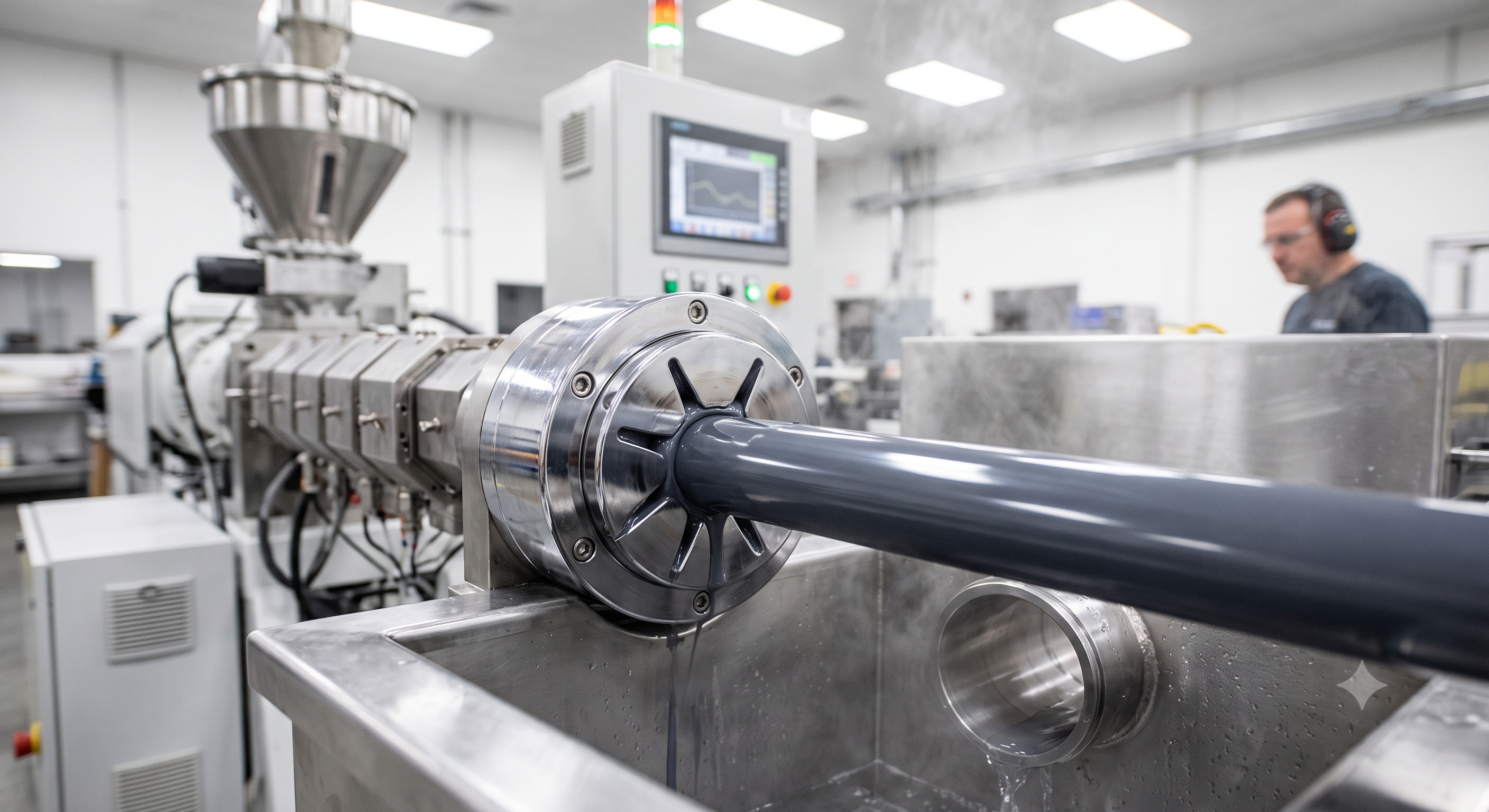
PVC External Lubricant for Pipe Extrusion | Flamingo
Sticking, burning, and dull surfaces on rigid PVC pipe rarely come from the resin. Most of the time, the formulation is asking one lubricant package to do two very different jobs — and the external half of that job is the one getting shortchanged.
If your line is fighting plate-out, dieface buildup, or surface defects that force you to run slower than the equipment allows, the fastest lever to check before touching anything else is the external lubricant.
Internal vs. external lubrication: two different jobs
Rigid PVC compounds need lubrication at two separate interfaces. Internal lubricants reduce friction between PVC particles themselves, controlling fusion rate and melt viscosity inside the compound. External lubricants do the opposite job: they reduce friction between the melt and the metal surfaces of the barrel, screw, and die, so the compound flows and releases cleanly instead of sticking.
When a formulation leans too hard on internal lubrication and skimps on external, the melt fuses well internally but drags against the metal. That drag shows up downstream as exactly the defects PVC processors search for solutions to.
What under-lubrication at the metal interface actually looks like
- Material sticking to the die land and building up until it tears loose, leaving surface gouges
- Localized burning or discoloration where degraded polymer clings to hot metal too long
- Dull or hazy surface finish instead of the gloss the pipe or profile spec calls for
- A hard ceiling on line speed, since pushing faster only accelerates metal buildup
Increase your line speed and eliminate surface defects. Talk to Flamingo Additives about our PVC lubrication waxes.
Why non-oxidized PE wax is the external lubricant of choice
High-quality, non-oxidized polyethylene wax is effective as an external lubricant because it is deliberately incompatible with the PVC matrix. That incompatibility is the feature: the wax migrates to the melt surface rather than dissolving into the compound, forming a thin, continuous film between the polymer melt and the metal tooling.
That surface film is what delivers clean metal release, reduces torque and shear heat at the barrel wall, and lets the melt move through the die without dragging. The result shows up directly as smoother extrusion, less dieface cleaning downtime, and a glossier finished surface.
Getting the balance right
The goal isn't to maximize external lubrication either. Too much and you risk plate-out on rolls or poor fusion at the interface; too little and you're back to sticking and burning. Direct-polymerized, non-oxidized PE waxes tend to give processors a wider, more forgiving processing window than oxidized or lower-purity alternatives, which is why they're the starting point most formulators reach for when tuning a rigid PVC pipe or profile line.
Quick answer: if rigid PVC pipe or profile is sticking, burning, or losing gloss at the die, increase or upgrade the external lubricant — typically a non-oxidized PE wax — rather than adjusting internal lubrication or resin selection first.
Spec the right lubrication package
Flamingo Additives supplies non-oxidized PE waxes engineered specifically as external lubricants for rigid PVC pipe and profile extrusion.
Talk to our technical team about a sample and a line trial to see the difference in metal release, gloss, and achievable line speed.
