 CALL US: +91-8657407598


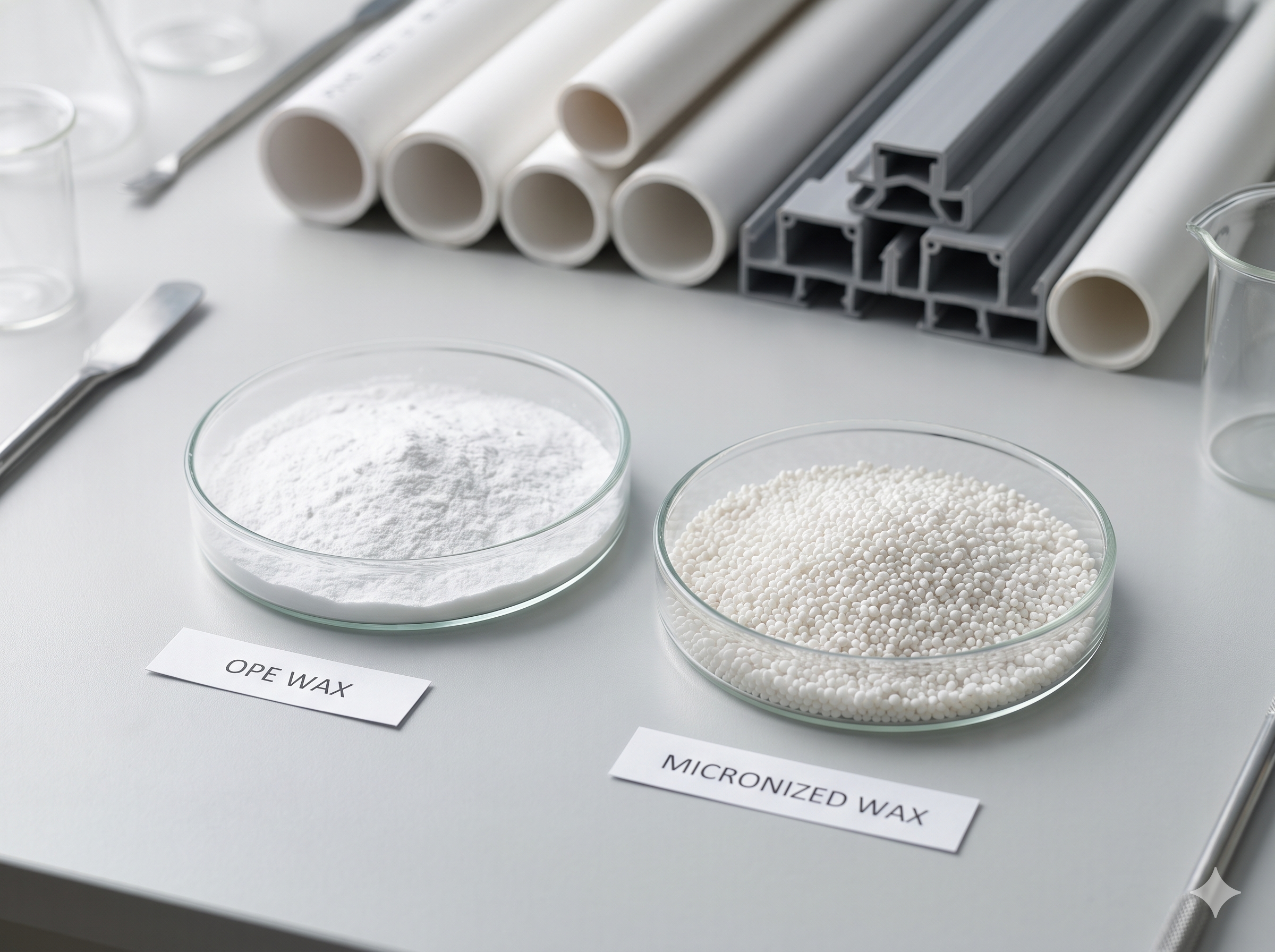
Oxidized vs. Non-Oxidized PE Wax: Selection Guide for Rigid and Flexible PVC Formulations
Key Takeaways
- Oxidized PE wax is polar, compatible with PVC and balances internal and external lubrication; non-oxidized PE wax is nonpolar and acts mainly as an external lubricant.
- In rigid PVC, typical starting dosages are around 0.1-0.5 phr; in flexible PVC, roughly 0.2-1.0 phr. Always confirm in trials.
- Overlubrication shows up as delayed fusion, torque drop and surface defects; underlubrication shows up as sticking and high torque.
- Viscowax covers both non-oxidized and oxidized PE waxes, plus EVA, polypropylene and maleic anhydride grafted waxes.
Polyethylene wax is a workhorse lubricant in PVC, but not all PE waxes behave the same way. The main decision is whether to use an oxidized or non-oxidized grade, and it depends on how much compatibility, lubrication and release you need.
What Is the Difference?
Non-oxidized PE wax is a nonpolar hydrocarbon. Oxidized PE wax has polar groups, mainly carboxylic acid and ester functionality, introduced onto the chain. That polarity changes how the wax interacts with PVC, metal surfaces, fillers and other additives.
Performance in Rigid PVC
Oxidized PE wax
The polar groups improve compatibility with PVC, so the wax acts as both an internal and external lubricant. In pipes, profiles and sheet, oxidized grades generally give:
- More controlled fusion and a balanced lubrication profile.
- Better pigment and filler dispersion.
- Good metal release without excessive slip.
- Lower risk of surface defects when balanced with calcium stearate and paraffin.
Typical starting dosage is around 0.1-0.5 phr, depending on the system and processing window.
Non-oxidized PE wax
Being less polar, non-oxidized wax acts mostly as an external lubricant. It gives strong metal release and slip but can delay fusion and cause plate-out or bloom if overdosed. It suits formulations that need strong external lubrication and already contain enough polar components for balance.
Performance in Flexible PVC
In plasticized PVC the plasticizer already provides lubrication, so wax use is more targeted. Oxidized PE wax can help calendering and release from rolls and belts and may improve filler and pigment dispersion. Non-oxidized grades are less common. Typical dosages run from roughly 0.2 to 1.0 phr, but trials should confirm the right level for your plasticizer system.
Quick Selection Checklist
| If you need... | Lean toward |
|---|---|
| To avoid delayed fusion | Oxidized grades |
| Strong release from metal | Either type; adjust dose carefully |
| To reduce plate-out or surface haze | Lower external lubricant or a more compatible oxidized grade |
| Better dispersion at high filler loading | Oxidized grades |
| To re-balance a stabilizer change | Review the full lubricant package, since Ca/Zn systems interact with polar waxes |
Troubleshooting
Signs of overlubrication
Poor fusion, torque drop and surface blemishes.
Signs of underlubrication
Sticking, burning and high torque. Change one variable at a time and judge by torque rheometry and extrusion trials.
Where Viscowax Fits
Viscowax is made by Innospec Leuna in Germany using solvent-free, direct polymerization and oxidation, with no catalyst residuals and high thermostability. The portfolio includes polyethylene waxes (non-oxidized), oxidized PE waxes, EVA waxes, oxidized EVA waxes, maleic anhydride grafted PE waxes, ethylene-alpha-olefin wax and polypropylene waxes. A key listed use is as a lubricant for PVC and other plastics. It is supplied in powder form in 25 kg PE bags from Mumbai.
Download the Viscowax Datasheet
Open the Viscowax page, click "View Datasheet" and complete the short form to download it. Send us your PVC recipe and process and we will recommend a trial matrix of oxidized and non-oxidized grades.
