 CALL US: +91-8657407598


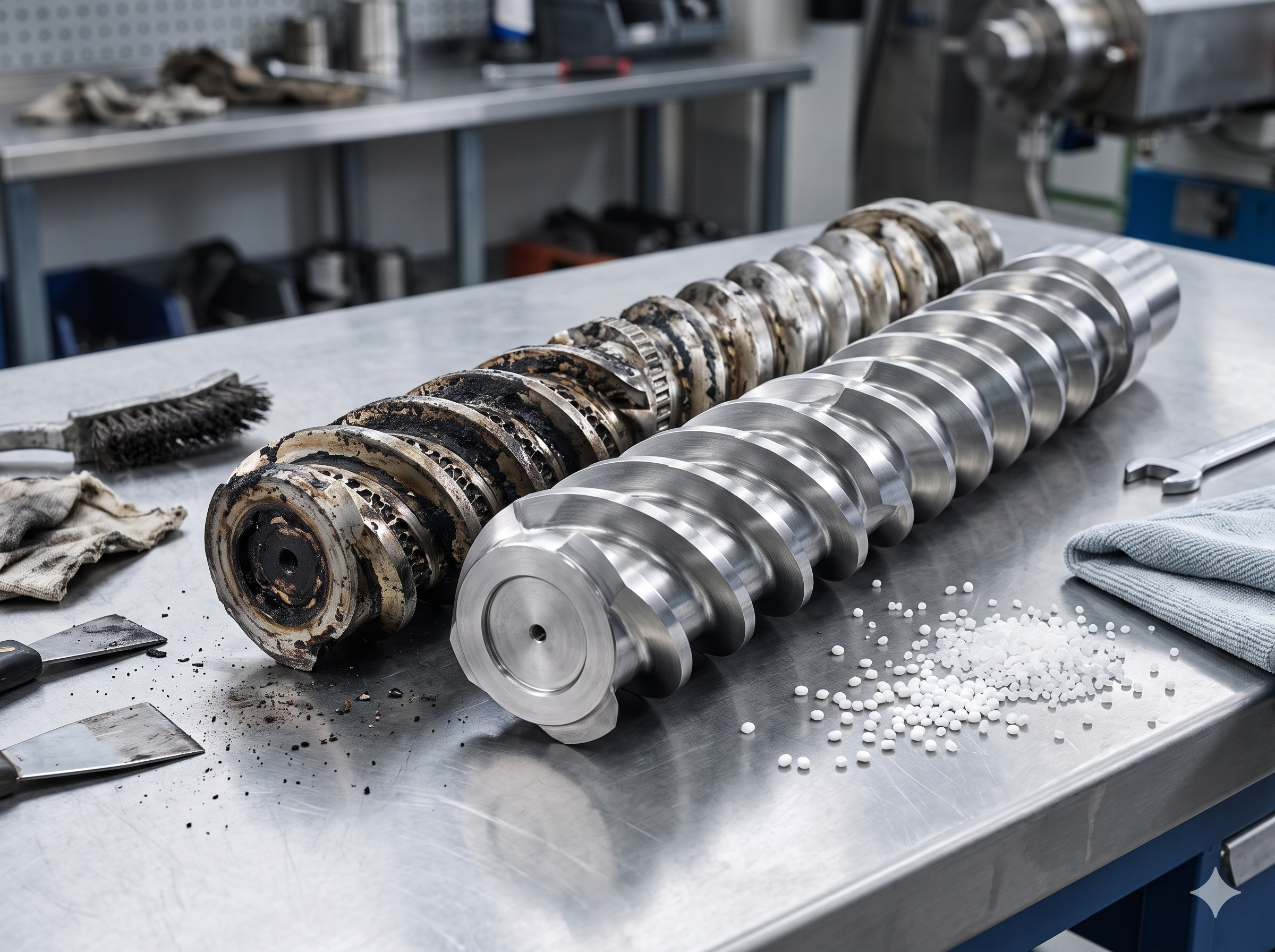
Mechanical vs. Chemical Purging Compounds: Extruder Screw Cleaning Guide for Processors
Key Takeaways
- Mechanical purges scrub with physical action; chemical purges lift and loosen residue; hybrids combine both.
- Choose by what you are removing, the resins before and after, screw metallurgy, temperature and available downtime.
- Abrasive purges can wear soft platings over time, so non-abrasive options are attractive for sensitive screws.
- Clean Xpress is a hybrid that combines non-abrasive mechanical cleaning with chemical strength.
Extruders collect residue wherever flow slows: screw flights, breaker plates, screens, adapters and dies. The right purging compound saves hours of teardown. The wrong one wastes material or even damages tooling.
The Three Types of Purging Compound
Mechanical (abrasive) purging compounds
These rely on physical scrubbing, often using a base polymer with mineral or glass fillers that scour barrel and screw surfaces. They work well on loosely attached contamination, color residue and light buildup.
- Strengths: fast, widely compatible, economical for routine color changes.
- Limits: abrasive fillers can wear soft platings over time, and they are less effective on carbonized deposits bonded to metal.
Chemical purging compounds
These use additives that react with or loosen residue. Many include foaming agents that expand in the barrel, lifting contamination and pushing it out. Others use detergent-like action that soaks into deposits.
- Strengths: effective on stubborn buildup and carbon, gentler on screw surfaces, good in dies and adapters.
- Limits: often need a soak time and are sensitive to temperature and material compatibility.
Hybrid purging compounds
Hybrids cover both color residue and deposits, which suits machines that run many materials. Clean Xpress follows this approach: mechanical cleaning without abrasion, combined with chemical strength, and the carrier is selected to match the resin being cleaned.
How to Choose
| Question | If the answer is... | Lean toward |
|---|---|---|
| What are you removing? | Color and light residue | Mechanical or hybrid |
| What are you removing? | Carbon, degraded polymer, stubborn buildup | Chemical or hybrid |
| Screw surface? | Plated or sensitive | Non-abrasive hybrid or chemical |
| Downtime available? | Very short | Fast-acting purge with no long soak |
| Resin change? | Polar to non-polar or vice versa | Grade with matching carrier |
Operating Tips for Any Extruder Purge
Before purging
Reduce the amount of material in the barrel so the compound contacts the screw directly. Match temperature to the outgoing resin or follow the supplier's guidance.
During purging
Use moderate screw speed for chemical products so they can act, and higher speed for mechanical ones. Watch the melt for color clearing and gel content.
After purging
Clear purge residue from dies and screens before restarting, and record each purge so the procedure improves over time.
Where Clean Xpress Applies
Flamingo lists solutions for wires and cables, pipes, tubes and profiles, injection molding, engineering polymers, compounding, and blown and cast films. It is described as food-contact approved and thermally stable, supplied as granules, and it keeps the film bubble and allows a continuous process in film lines. Always confirm the right grade for your resin in the datasheet.
Get the Datasheet or a Trial Grade
Visit the Clean Xpress Purging Compound page, click "View Datasheet" and complete the short form to download it. Tell us your resin, screw type and the problem you are solving, and we will recommend a grade and trial plan.
