 CALL US: +91-8657407598


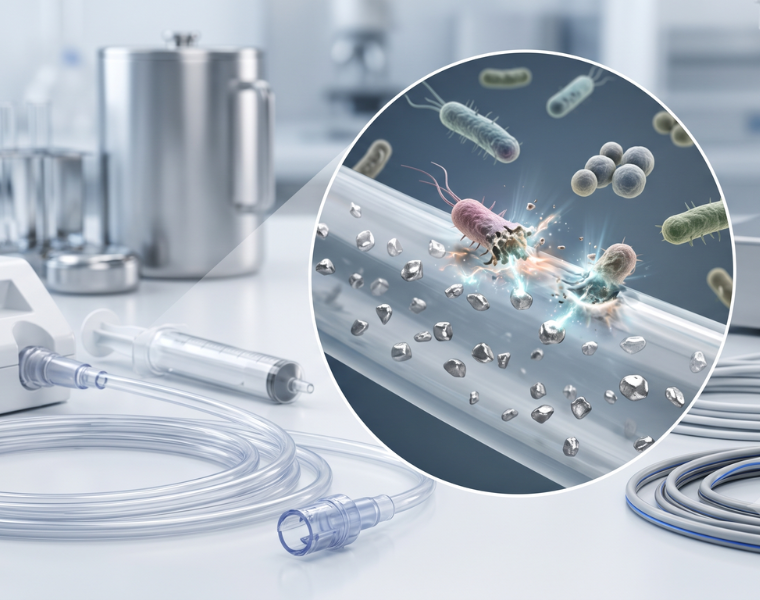
ISO 10993 for Medical Plastics: How Antimicrobial Masterbatch Helps Medical Devices Pass Biocompatibility Testing
Medical plastics are everywhere in modern healthcare. From IV tubing and syringes to hospital bed rails, ventilator housings and diagnostic equipment, polymers have become the preferred material because they are lightweight, durable, cost-effective and easy to manufacture.
However, these same plastic surfaces are continuously exposed to bacteria, fungi and other harmful microorganisms. Healthcare-associated infections (HAIs) remain one of the biggest challenges for hospitals worldwide, making antimicrobial protection an increasingly important requirement during medical device manufacturing.
This is where antimicrobial masterbatch for medical plastics plays a critical role. By incorporating antimicrobial additives directly into the polymer during compounding, manufacturers can provide continuous protection against microbial growth throughout the product's lifecycle.
But introducing an antimicrobial additive into a medical device is far more complex than adding colour or improving UV stability. Every formulation must also satisfy stringent biocompatibility requirements under ISO 10993, ensuring that the antimicrobial technology remains effective against bacteria while remaining completely safe for human contact.
What Is ISO 10993?
ISO 10993 is the internationally recognised standard for the biological evaluation of medical devices. It establishes the testing procedures used to determine whether materials used in medical devices are biologically safe when they come into contact with the human body.
Manufacturers seeking FDA approval or CE certification often rely on ISO 10993 testing to demonstrate that their medical plastics do not cause harmful biological reactions.
Depending on the application, ISO 10993 evaluates factors including:
- Cytotoxicity
- Skin irritation
- Sensitisation
- Chemical characterisation
- Systemic toxicity
- Implant compatibility
- Material degradation
For antimicrobial plastics, one of the most important sections is ISO 10993-5, which evaluates whether the material is toxic to living mammalian cells.
Why Medical Plastics Need Antimicrobial Protection
Plastic components are touched thousands of times throughout their service life. Medical devices frequently encounter bacteria such as Staphylococcus aureus, MRSA and E. coli, especially in high-contact hospital environments.
While routine cleaning reduces contamination, it cannot prevent microbes from recolonising plastic surfaces within a short period. Manufacturers therefore increasingly incorporate antimicrobial additives directly into the polymer instead of relying solely on surface disinfectants.
Common Medical Devices Using Antimicrobial Plastics
- Hospital bed components
- Diagnostic equipment housings
- Patient monitoring systems
- Wheelchairs
- Catheters
- IV tubing
- Respiratory devices
- Syringes
- Surgical trays
- Medical packaging
Durable Medical Equipment vs Disposable Medical Devices
Every medical application presents different engineering challenges. Selecting the correct antimicrobial masterbatch depends heavily on the product's intended lifespan and level of patient contact.
Durable Medical Equipment (DME)
Hospital beds, monitor housings, infusion pump casings and diagnostic equipment remain in service for many years while undergoing aggressive cleaning multiple times every day.
These products are routinely exposed to bleach, alcohol-based disinfectants and quaternary ammonium compounds. Surface coatings eventually wear away, making internally compounded antimicrobial technology a far more reliable long-term solution.
Typical Polymers Used
- Polycarbonate (PC)
- ABS
- PC/ABS blends
- High Impact Polystyrene (HIPS)
Disposable Medical Devices
Disposable products such as IV catheters, syringes and medical tubing have a completely different requirement. Since they come into direct contact with blood, tissue and bodily fluids, preventing chemical migration becomes the highest priority.
Any antimicrobial additive that leaches into the patient may compromise safety and lead to regulatory failure.
Common Materials
- PVC
- Polyurethane
- Polyethylene (HDPE)
- Polypropylene (PP)
Understanding ISO 10993-5 Cytotoxicity Testing
ISO 10993-5 specifically evaluates whether chemicals released from a medical plastic are toxic to mammalian cells.
During testing, extracts from the plastic material are introduced to living cell cultures. If the released substances damage or destroy these cells, the material fails the cytotoxicity assessment.
Why Some Antimicrobial Masterbatches Fail
Low-cost antimicrobial systems often rely on organic biocides that migrate rapidly from the polymer matrix. Although they may provide excellent short-term antibacterial performance, excessive migration increases the likelihood of cytotoxicity failure.
In medical applications, antimicrobial performance alone is not sufficient. Long-term biological safety is equally important.
Why Silver Ion Technology Is Widely Used in Medical Plastics
Most premium medical-grade antimicrobial masterbatches use inorganic silver ion technology because it offers excellent antimicrobial performance while maintaining biocompatibility when properly formulated.
Silver ions work through multiple mechanisms simultaneously, making bacterial resistance significantly less likely compared with many conventional antimicrobial agents.
How Silver Ions Control Bacterial Growth
Silver ions interfere with bacterial cell walls, interrupt enzyme activity, disrupt cellular respiration and prevent DNA replication. Rather than attacking a single biological pathway, they affect several essential functions at the same time.
This multi-target mechanism provides effective protection against a wide range of microorganisms while remaining suitable for medical applications when correctly engineered.
The Importance of Polymer Compatibility
The antimicrobial ingredient itself is only one part of the formulation. The carrier resin, polymer compatibility and compounding process largely determine whether the additive performs consistently throughout the product's life.
Dispersion Matters
Uniform dispersion ensures that antimicrobial particles remain evenly distributed throughout the polymer. Poor dispersion creates weak areas with reduced antimicrobial protection while also affecting mechanical properties and appearance.
Controlled Release Is Essential
Silver ions must be released gradually over time. If they are locked too tightly inside the polymer, surface protection becomes ineffective. If they migrate too quickly, antimicrobial performance declines prematurely and the risk of regulatory failure increases.
Thermal Stability During Processing
Many engineering plastics are processed at temperatures exceeding 280°C. Medical-grade antimicrobial masterbatches must maintain stability during injection moulding and extrusion without degrading, agglomerating or causing discolouration.
Selecting the Right Antimicrobial Masterbatch for Medical Applications
Choosing an antimicrobial additive involves much more than comparing antibacterial performance. Manufacturers should evaluate compatibility with the base polymer, processing temperatures, expected product lifespan, regulatory requirements and intended patient contact.
Every polymer behaves differently. PVC, HDPE, polypropylene, ABS and polycarbonate each require carefully engineered formulations to achieve optimal dispersion, controlled ion release and long-term antimicrobial effectiveness.
Medical Polymer Compounding Requires Technical Expertise
Developing antimicrobial medical plastics requires collaboration between polymer scientists, compounding specialists, regulatory experts and medical device manufacturers. Small formulation changes can significantly influence processing behaviour, long-term antimicrobial performance and ISO 10993 compliance.
A properly engineered medical-grade antimicrobial masterbatch should deliver consistent bacterial protection, excellent processing stability, minimal colour variation and reliable long-term performance while meeting global biocompatibility requirements.
Partner with Flamingo Additives for Medical-Grade Antimicrobial Masterbatch
At Flamingo Additives & Colourants LLP, we develop advanced antimicrobial masterbatch solutions specifically engineered for medical plastics, healthcare equipment and regulated polymer applications.
Our technical team works closely with manufacturers to develop customised formulations compatible with PVC, polypropylene, HDPE, ABS, polycarbonate and other engineering polymers while supporting the demanding requirements of ISO 10993 biocompatibility testing.
Whether you manufacture durable medical equipment or disposable medical devices, we can help you develop antimicrobial plastic compounds that combine reliable antimicrobial performance, processing stability and regulatory confidence.
